

Electrofusion (EF) joins polyethylene (PE) pipe using fittings with built-in heating coils. Current passed through the coils melts the surfaces of the pipe and the fitting, which mix under pressure and fuse into one permanent part as they cool. EF is used where butt fusion isn’t practical – adding valves, elbows, tees and saddles – across gas, water, waste water and civil infrastructure.
How electrofusion works
An EF fitting has metal heating coils embedded in it. The weld runs like this:
- The control box sends current through the coils and the metal heats up.
- The plastic around the coils melts into an expanding pool of molten PE.
- The melt pool reaches the pipe surface, which also melts.
- As pressure builds in the fitting, the two melts are forced to mix – this is what makes the weld.
- Current stops, the joint cools, and the material solidifies into one permanent part.
Heating the coils forms hot and cold zones (also called melt and freeze zones). The length of these zones sets the melt pressure, and the coils have to be positioned precisely so the heat spreads evenly. The three fusion parameters – temperature, pressure and time – are controlled by the control box, which reads them from the fitting’s barcode or the fitting itself, and records the weld as it goes.
Getting a good weld
A good electrofusion weld comes down to two things at every step: precision (being exact) and accuracy (being correct). Precision is the right tool and the right parameters – vernier calipers read peel depth to 0.02 mm, where a metal rule only reads to 1 mm, fine for a witness mark but not for peel depth. Accuracy is using the correct tool correctly.
The reference is PIPA POP001 – the Australian best-practice guidelines for electrofusion. Following every step in POP001 is the single best thing you can do for weld quality. Skipping steps undermines the weld and can lead to failed pipelines; it can also expose operators to claims of negligence and compromise insurance cover.
Prepare the pipe: peel and clean
PE pipe leaves the factory with an oxidised outer layer. That layer inhibits fusion and will cause weld failure if it isn’t removed, so the pipe must be peeled before welding – with an approved electrofusion peeler that takes off a uniform layer. Do not scrape with sandpaper, a wire brush or a file: those re-contaminate the surface and can’t remove an even layer.
Pipe Size
Up to DN25
Up to DN75
Larger than DN75
Peel depth (uniform)
Maximum 0.2 mm
0.2–0.3 mm
0.2–0.4 mm
After peeling, wipe the surface with approved isopropyl alcohol EF wipes – not metho, acetone, turpentine, baby wipes or paint stripper, which leave contaminants. Don’t touch the peeled pipe or the inside of the fitting afterward; if you do, re-clean with an IPA wipe and let it dry. Refer to PIPA for current peel guidelines.
Clamp, weld and cool
Clamp the pipe and fitting so they stay aligned and the weight of the pipe can’t put lateral load on the join or let anything move during welding and cooling. The weld has two phases, fusion (heating) and cooling; cool-down times are on the fitting barcode, and the joint stays clamped until cooling is complete. Only then is the joint water- and gas-tight. The maximum gap between pipe and fitting is 1% of pipe OD for concentric pipe and 2% for eccentric pipe (PIPA POP001).
Pipe ovality
Ovality – out-of-roundness – is one of the most common problems in PE pipe, and one of the biggest causes of failed EF welds. The same flexibility that makes PE useful lets it change shape. Get the pipe round before you weld.
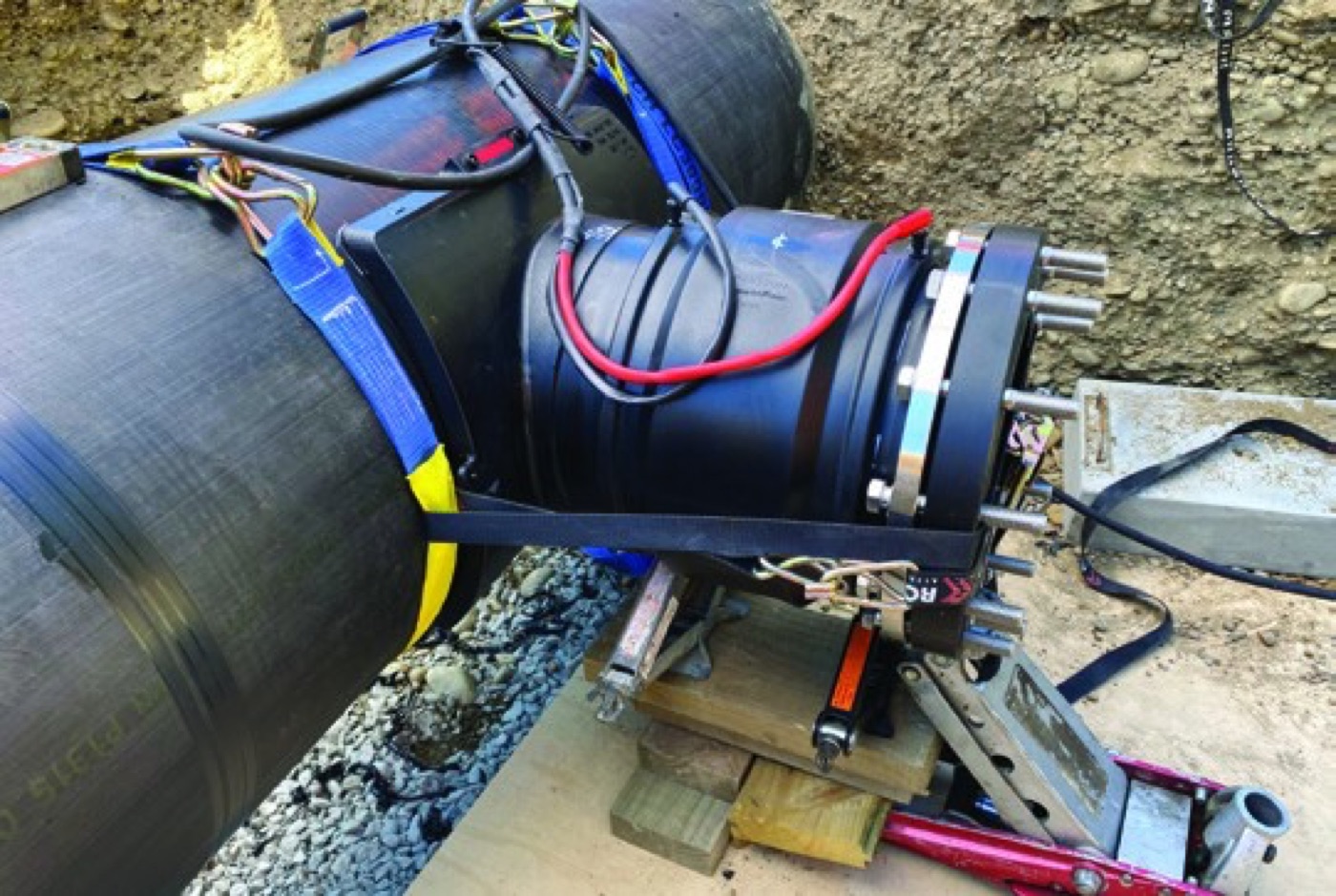
Ovality matters because electrofusion has to seal the gap between pipe and fitting and build interfacial pressure for fusion to happen. If the pipe is out-of-round, its surface may not fully contact the fitting’s fusion zone. Molten material can then escape through the fitting’s cold zones without penetrating the pipe – a weak or failed weld. It’s a particular risk on tapping and branch saddles, which don’t fully encircle the pipe the way a coupler does.
How PE pipe becomes out-of-round
Cause
Manufacturing
Storage
Time
Installation
Previous installation
What happens
Pipe leaves the factory outside the allowed ovality for the job or fitting.
Pipe warehoused or stacked can deform – worse on large diameter.
Large-diameter pipe relaxes under its own weight and flexibility during storage.
Trenchless methods like pipe bursting or directional drilling can leave pipe elongated and out-of-round.
Pipe that's been buried is subject to earth loads that make it sag or go out-of-round.
How to check and correct it
Measure the pipe diameter in several directions across the end with a tape measure – extreme cases are visible by eye. If it’s over tolerance, use a re-rounding clamp to bring it back to round before welding. The PLASSON tooling range includes re-rounding clamps and the other tools for correct pipe prep.
The following table shows the approved dimensions for PE100 pipe.
DN = nominal diameter (mm). Min Wall, Mean ID and Ovality Max in mm. Weight = average kg/m. SDR = outside diameter ÷ wall thickness; a lower SDR is a thicker wall and a higher pressure rating. “–” not offered in that class. POA = price on application.
Troubleshooting electrofusion weld failures
Symptom
Melt extrudes from the fitting (“melt out”)
Weld indicator pins didn't rise
Power cut or gen-set dies mid-weld
Touched or contaminated the fitting bore
What it means
Something went wrong – pipe ovality poor alignment ends not cut square or insufficient clamping.
Not necessarily a bad weld – the pins are only a visual indicator that the fitting has welded.
The weld cycle was interrupted.
Contamination will cause weld failure.
What to do
Cut out the fitting and replace it.
Assess against the full weld record not the pins alone.
Let the fitting cool for 24 hours then weld again for the full weld time.
Re-clean with an IPA wipe let it dry avoid further contact.
Who can install electrofusion fittings
Operators welding EF fittings on PE pipelines must be trained and qualified in PE welding by an accredited training organisation. PIPA maintains a list of approved trainers. Systems like SmartFuse support certified installers – they don’t remove the requirement to be certified.
The SmartFuse system
PLASSON’s SmartFuse Electrofusion system is built to make POP001 easier to follow. SmartFuse electrofusion fittings carry built-in resistors that load the correct weld parameters automatically. The control boxes detect parameters without manual entry or scanning, and the free app guides each weld, prompts the best-practice steps, and records the job – GPS location, fitting type and barcode, installer ID, control-box weld data, photos of each step, even the temperature on the day – to USB or the cloud. That removes input errors and takes care of certification records.
FAQs
What is electrofusion?
A method of joining PE pipe using fittings with built-in heating coils. Current melts the pipe and fitting surfaces, which fuse into one permanent part as they cool.
How does an electrofusion weld work?
An electrofusion control box heats coils in the fitting, melting the fitting and pipe surfaces. Pressure forces the two melts to mix, and they solidify into a permanent joint on cooling.
Why do you peel PE pipe before electrofusion?
To remove the oxidised outer layer left by manufacturing. Left on, it inhibits fusion and causes weld failure.
Can you scrape the pipe instead of peeling it?
No. Sandpaper, a wire brush or a file will re-contaminate the surface and won’t remove a uniform layer. Always use an approved electrofusion peeler.
What causes electrofusion weld failure?
Most often pipe ovality, contamination, poor pipe preparation, ends not cut square, or insufficient clamping.
Do you need a licence to electrofusion weld?
Operators must be trained and qualified in PE welding by an accredited training organisation. PIPA lists approved trainers.
What is pipe ovality and why does it matter?
Out-of-roundness in PE pipe. It stops the pipe from fully contacting the fitting’s fusion zone, so the weld may not penetrate – check and re-round the pipe before welding.
